The Putter with a Tragic Past
I recently acquired a fairly inconspicuous hickory-shafted aluminium putter, that I have since learned has a considerably more interesting – and historically tragic – background story.
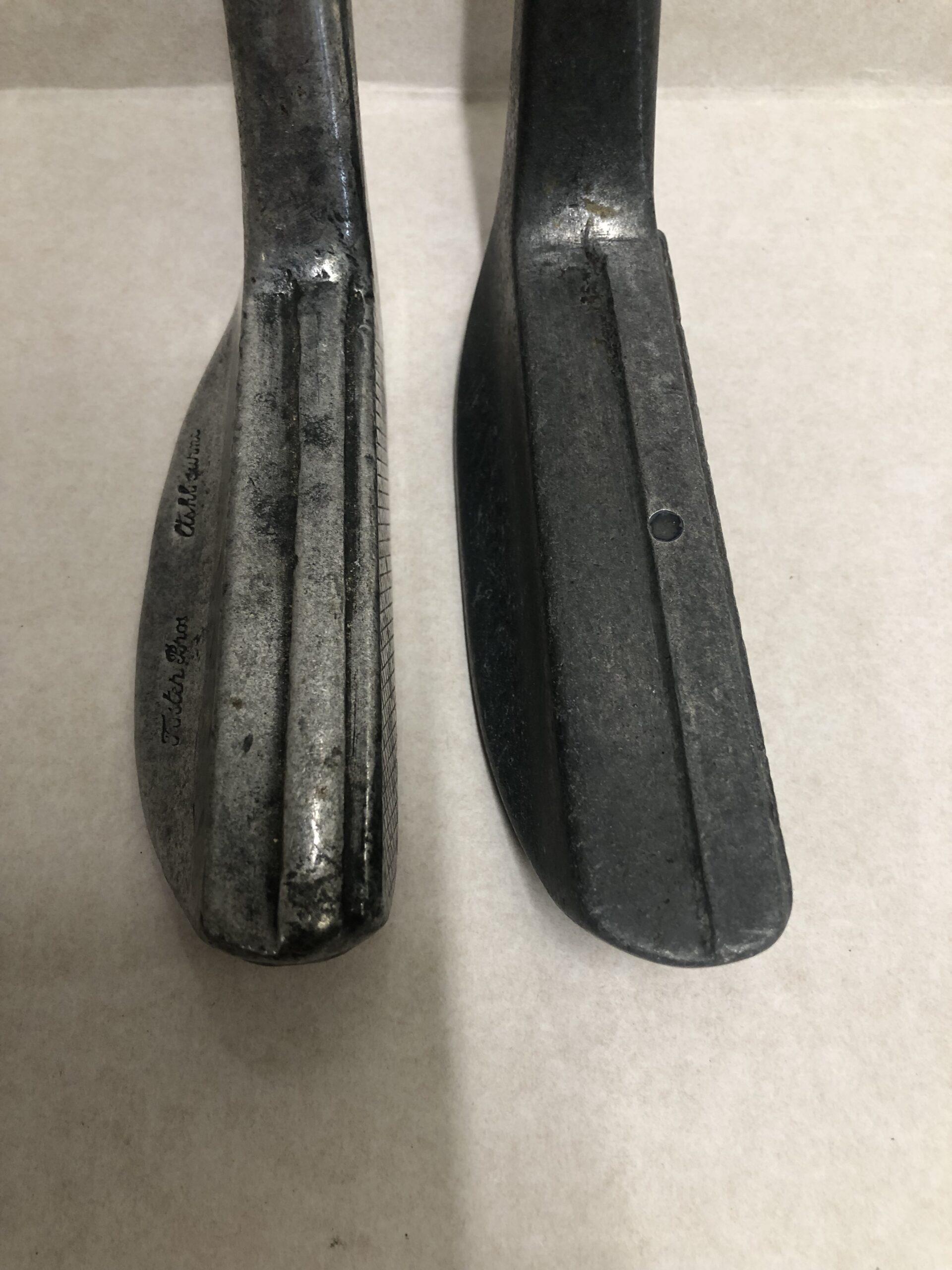
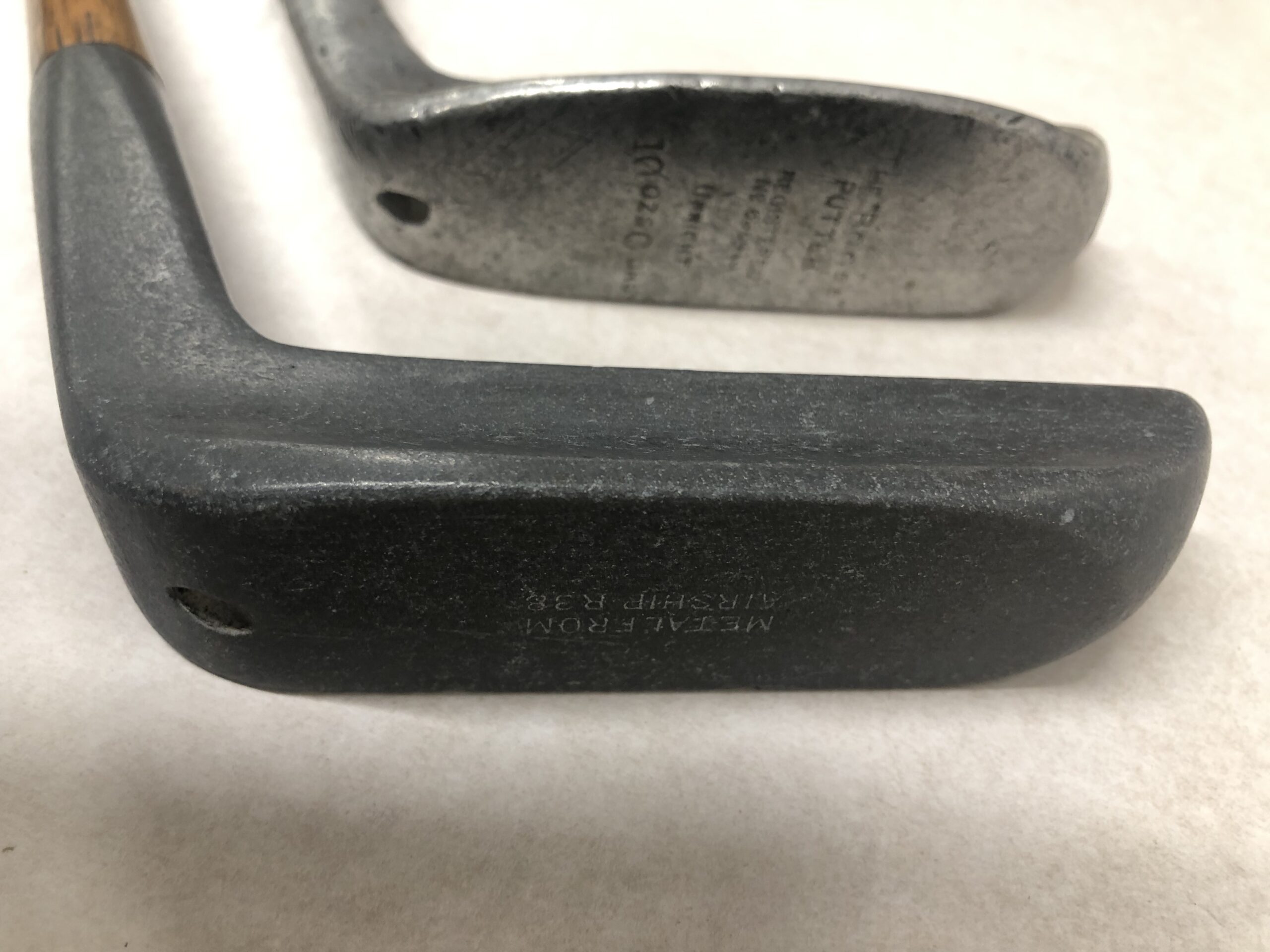
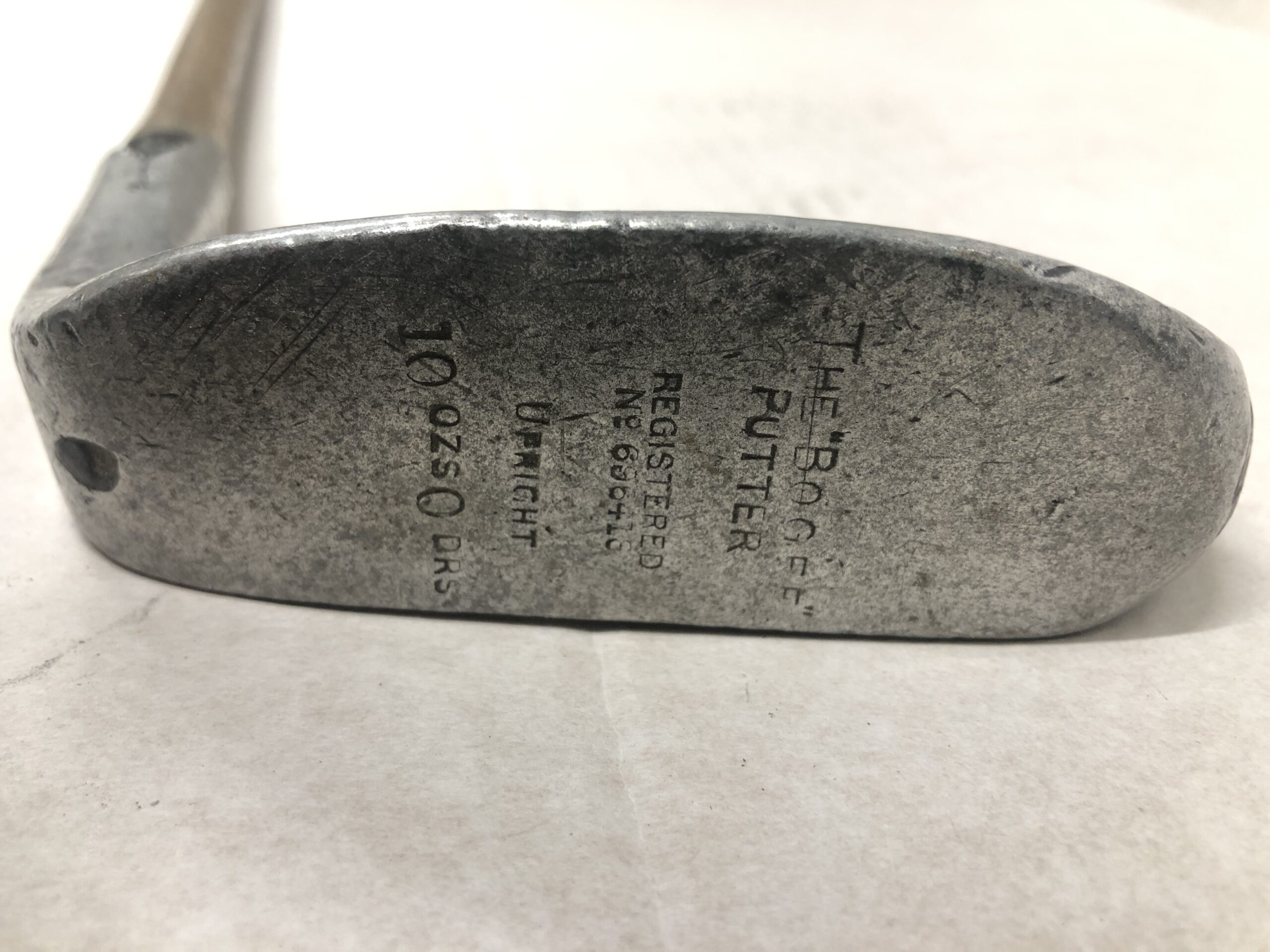
There are no makers’ marks on top of this putter head, and it doesn’t have the usual rounded, mallet design of the Standard Golf Company’s ‘Braid-Mills’ model putters. However, the shape is a familiar one, and is almost identical to the square hosel ‘Bogee’ putter that was produced by Foster Brothers of Ashbourne, Derbyshire.
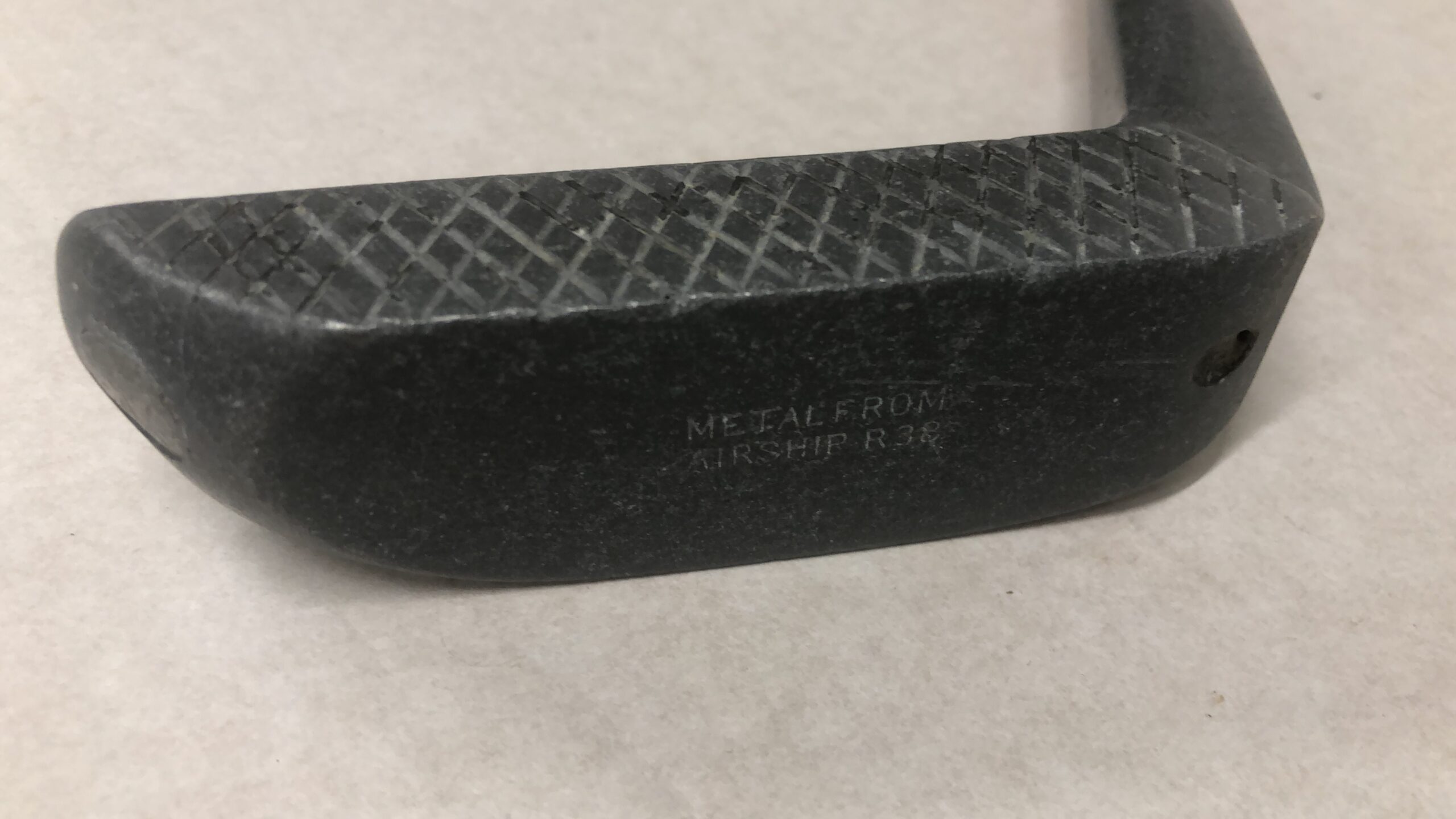
Collectors will know, old hickory aluminium putter heads are usually a dull, matte grey colour, and the oxidization of the metal can leave a fine powdery dust on the surface, making it difficult to read any makers’ marks. At a first cursory glance, it didn’t appear that there were any distinguishing features (marks) on this putter. However, closer examination, and a light wipe over with a clean cloth, revealed some capital letters in a fine font, with the words ‘METAL FROM AIRSHIP R38’ stamped on the sole.
I must admit that I was not familiar with Airship R38, and the tragic story that unfolded on a summer day, August 24th 1921, in the sky just off the East Yorkshire coast.
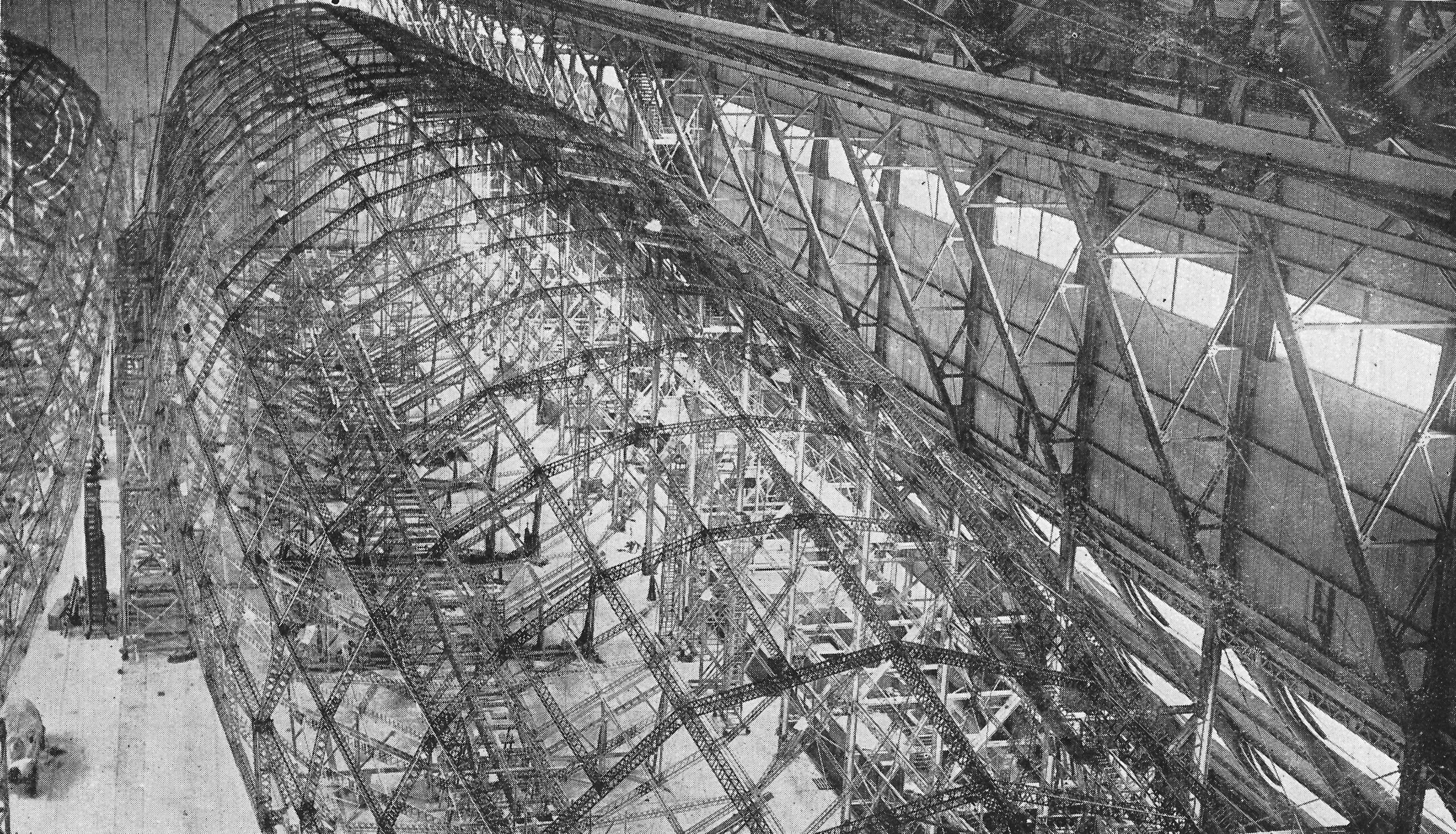
During the First World War, Germany maximised an aeronautical advantage it had with airships manufactured by the Zeppelin Company, which could travel great distances at high altitudes, and at speeds of up to 64 mph, carrying a bomb payload of over 2 tons. The ‘Zeppelins’ were used to great effect for reconnaissance over land and sea, as well as bombing raids on cities, factories, and military bases. Seeing the need for something similar, the British Admiralty awarded the commission to Short Brothers, an aeronautical company manufacturing seaplanes at Cardington, near Bedford, who already had experience producing balloons and smaller airships. The Admiralty’s specification in June 1918 was for an airship “required to patrol the North Sea for six days without support, as far as 300 miles from a home base”. It was to have a combat ceiling of 22,000ft, to make it out of reach of most intercepting aircraft then in service, and was required to carry enough fuel for 65 hours at full speed of 70.6 mph. Four airships were ordered, the first and lead ship of the class being designated the R38, to be followed by the R39, R40 and R41.
However, following the armistice with Germany on 11th November 1918, and the subsequent downturn in the economy, the Admiralty cancelled all but the order for the R38. Before its completion, the airship was subsequently sold to the United States Navy in October 1919 for the sum of £300,00 ($2,500,000), with the American designation/registration to be changed to ZR-2. A United States crew of 9 Officers, 18 enlisted men, a Medical Officer, and a Supply Officer, were brought over to England on 20th April 1920, and stationed at the Howden airstrip near Hull, to begin training on a smaller airship, the R32, before combining with a British aircrew once R38 /ZR-2 was completed.
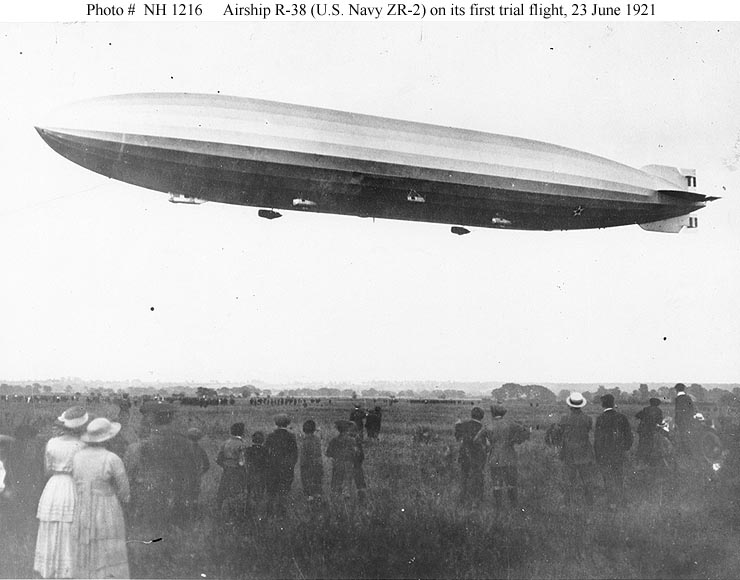
The first test flight of R38/ZR-2 was made on 23rd June 1921, and at an overall length of 699ft it was then the largest airship in the world. By the fourth test flight on 23rd/24th August, it had almost completed the final trials deemed necessary before its official handover to the American crew, who would then take charge of its transatlantic delivery to Lakehurst, New Jersey.
The R38 left Howden on the 23rd August intending to carry out speed and turning trials over the North Sea en route to RNAS Pulham in Norfolk. However, low cloud at Pulman prevented the R38 mooring that day, so it was decided to spend the night out at sea, and make another attempt the following day. Unfortunately, persistent low cloud off the Norfolk coast prevented this second attempt, and it was decided to return to Howden. A signal was sent to the Air Ministry at 5:00pm giving an estimated arrival time at Howden of around 7:30pm. By 5:34pm the R38 was flying low over the East Yorkshire city of Hull, just at the time that people were returning home from work. The clouds had broken, and on that clear Wednesday evening large crowds gathered to watch as the airship passed low overhead at about 2500 feet.
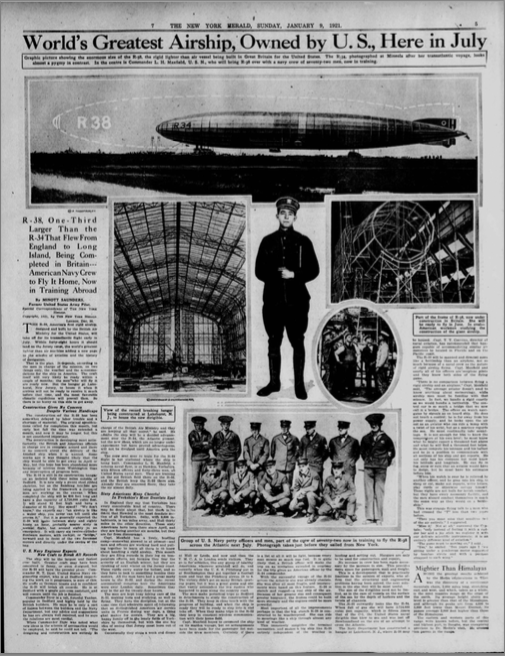
Passing over the Humber estuary, only a few hundred yards off shore, the crewmen in the glass floor to ceiling control car could clearly be seen by the public below, as the airship made some sharp steering manoeuvres testing the rudders. It was then that disaster struck, with eye witnesses describing how the airship seemed to ‘wrinkle’ and ‘twist’, before the front section broke away, catching fire on its descent to the Humber below.
The front section fire then detonated the ruptured hydrogen gas cells, causing two huge explosions. Burning debris from the airship fell into the estuary below, igniting oil and petrol from the fuel tanks on the water’s surface. In the city windows were shattered over a wide area, with reports of people being cut by flying glass and knocked off their feet.

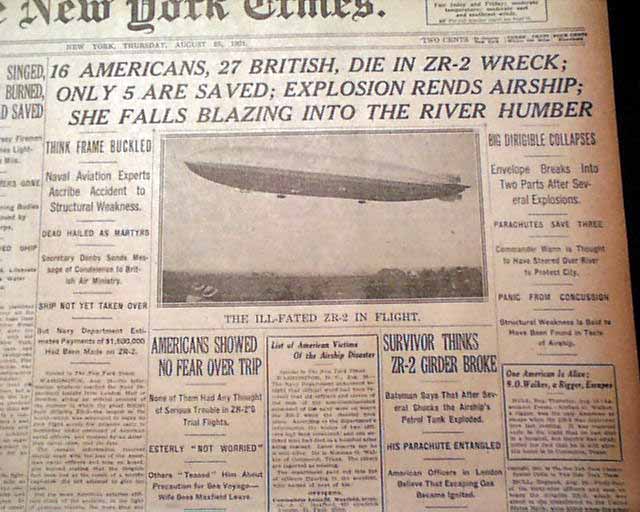
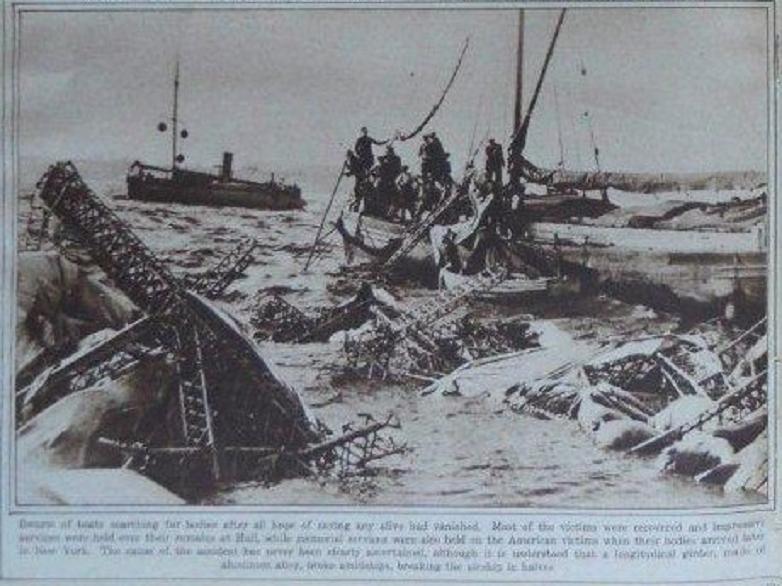
The crewmembers in the tail section were the fortunate ones as this part of the airship never caught fire, but glided slowly down to land on a soft sandbank. Hampered by burning fuel and the shallow depth of the estuary at low tide, only small boats were able to approach the scene of devastation. Of the 49 people aboard only 5 survived -16 of the 17 Americans, and 28 of the 32 Britons were killed.
Soon after the tragedy, a memorial to those killed in the disaster was erected in Hull, and in 2021 a centenary memorial service was held in the city’s Minster.
The ‘Aeronautical Journal’ at the time wrote “The disaster of the R38 is without exception the greatest single catastrophe in the history of aeronautics”.
It is certainly thought-provoking to reflect that the metal used to produce this modest putter was involved in such a tragic and historic incident.